How senior are you, really?
Technical Interview Practice, AI‑Graded
Prove it, fix your gaps, and walk into your next interview ready. AI grades your answers like a real senior engineer—free assessment, no signup.
Take the Free Assessment5 minutes · see your weak spots instantly · no account needed
Explain the difference between optimistic and pessimistic locking.
“Optimistic locking assumes conflicts are rare—reads proceed without locks, then checks a version column at write time. If it changed, the transaction retries. Pessimistic locking acquires a lock on read (SELECT FOR UPDATE), blocking other transactions until commit. Optimistic scales better under low contention; pessimistic prevents wasted retries under high contention.”
Complete. Covers mechanism, trade-offs, and when to use each.
This is the actual feedback you get.
Built by Nikola Pashov — senior software engineer. Every question and scoring rubric comes from real interview experience, not generated content.
AI grades like a senior engineer
No multiple choice. You type real answers. AI evaluates depth, completeness, and accuracy.
What is the Global Interpreter Lock (GIL) and why does it exist?
“A mutex that prevents multiple threads from executing Python bytecode simultaneously.”
Correct mechanism, but missing: memory safety rationale, impact on CPU-bound vs I/O-bound tasks, and common workarounds.
One assessment shows where you stand. Daily training makes you ready.
Most engineers cram before interviews and forget everything within days. GrindQuestionsAI uses spaced repetition—the same science behind medical school flashcards—to schedule reviews at the exact moment you’re about to forget. The result: knowledge that sticks.
Answer open-ended questions
No multiple choice. Type what you know, like a real interview.
AI scores you and drills what you missed
Each answer scored against expert criteria. Failed concepts come back until you can explain them cold.
Track progress over time
Pass rates, retention curves, and weak domains—all measured.
See it in action
Real data from real study sessions. No mockups.
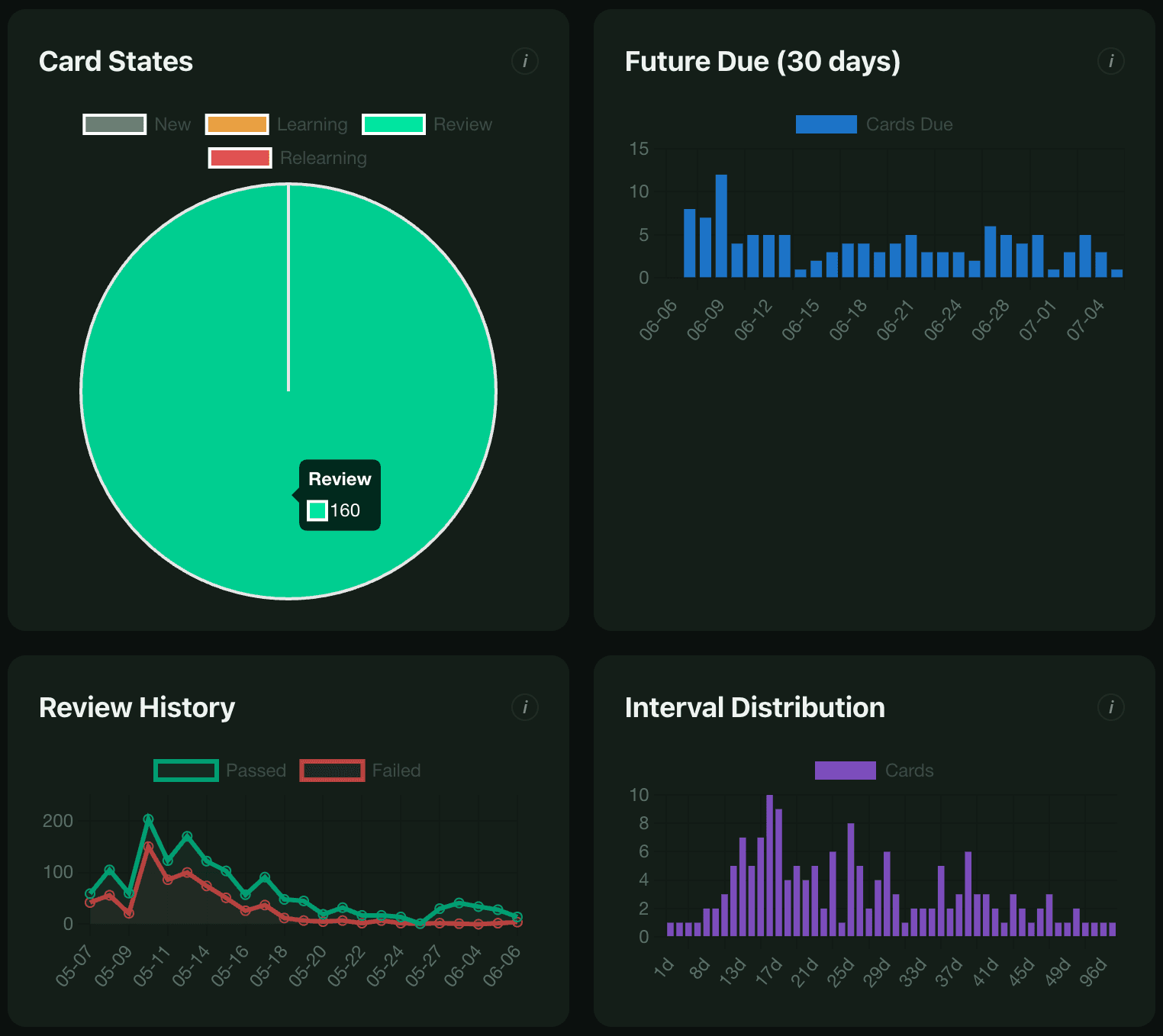
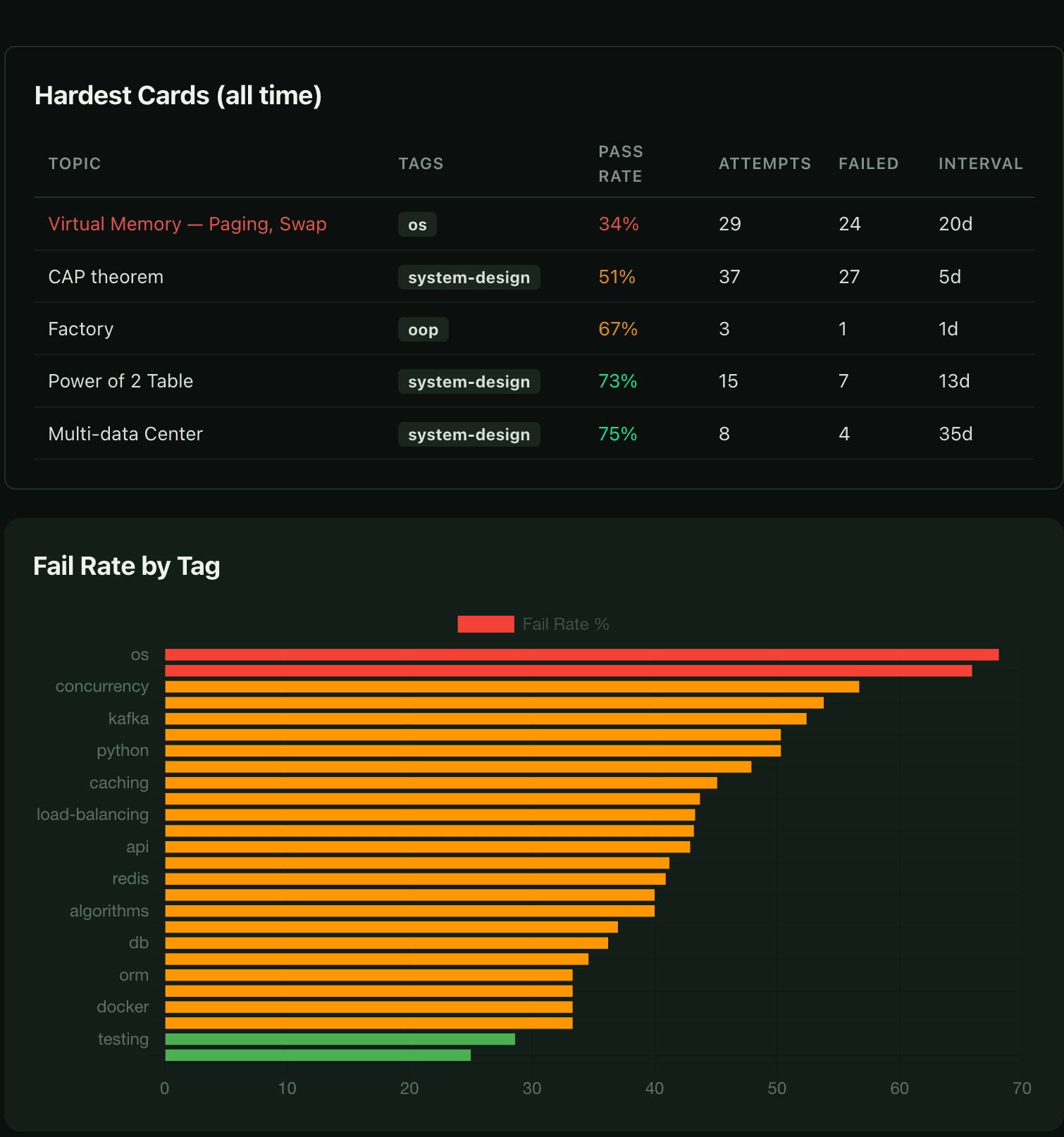
220 questions across 13 domains
The concepts that come up in real senior-level interviews.
How we compare
Built for engineers who need real signal, not practice theater.
| GrindQuestionsAI | ChatGPT | LeetCode | |
|---|---|---|---|
| Remembers what you got wrong | Yes | No | Partial |
| Spaced repetition scheduling | Yes | No | No |
| Consistent scoring per question | Yes | No | Partial |
| Senior-level concept depth | Yes | Varies | No |
| Open-ended answer grading | Yes | Manual | No |
| Free to try | Yes | Yes | Limited |
Explore by interview type
Deep practice for every dimension of the technical interview.
Find out where you stand. Then start getting better.
Free assessment. No signup. 5 minutes.
Start Free AssessmentCommon Questions
How does AI interview grading work?
You type your answer to an open-ended technical question in your own words. AI evaluates your response on depth, accuracy, and completeness against expert-defined criteria, then scores it 0-3. If your answer is incomplete, AI asks a follow-up question probing the specific gap — just like a real interviewer would.
What topics does GrindQuestionsAI cover?
220 questions across 13 engineering domains: Python Internals, System Design, Databases & SQL, Distributed Systems, Networking & HTTP, Caching, Operating Systems, Data Structures, API Design, Security, Concurrency, Cloud & Infrastructure, Monitoring, Testing, Architecture Patterns, and Java.
Is GrindQuestionsAI free?
Yes, you can take a free technical assessment with AI grading — no signup required. The free assessment covers multiple domains and gives you a real score with detailed feedback on each answer.
How is this different from ChatGPT for interview prep?
ChatGPT can grade answers but has no memory across sessions, no spaced repetition scheduling, and no progress tracking. GrindQuestionsAI remembers what you got wrong, schedules reviews at optimal intervals, tracks your progress across domains, and uses consistent scoring criteria per question.